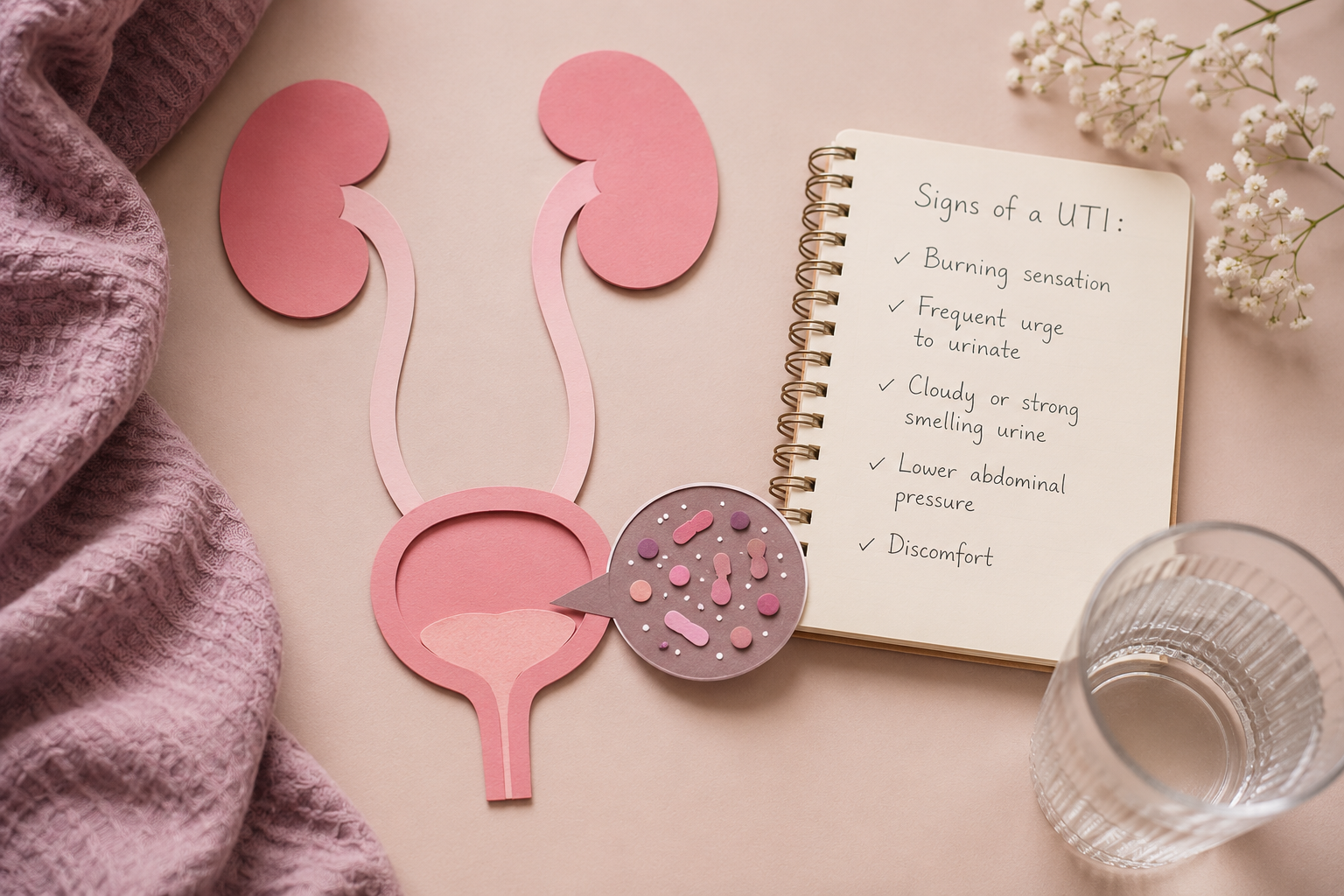
A urinary tract infection (UTI) is one of the most common bacterial infections affecting women’s health, with over half of all females experiencing at least one infection in their lifetime. If you have ever wondered why do women get UTIs so frequently or asked yourself, “Why does it burn when I pee?” – understanding UTI symptoms in women and their root causes is the first step toward fast relief and long-term UTI prevention.
What Is a UTI and Why Are Women More Prone to Them?
A urinary tract infection in women occurs when harmful bacteria enter the urinary system—which includes the urethra, bladder, ureters, and kidneys—and begin to multiply. Most infections occur in the lower urinary tract, specifically causing a UTI vs bladder infection dynamic (cystitis).
Causes
Understanding why are women more prone to UTIs comes down to basic anatomy and physiological UTI risk factors in women:
- Shorter Urethra: A female urethra is significantly shorter than a male’s. This shorter distance allows bacteria from outside the body to travel up into the bladder much faster.
- Proximity to the Anus: The urethral opening sits close to the anus, where Escherichia coli (E. coli) bacteria naturally live. Simple movements can easily transfer bacteria to the urinary tract.
- Sexual Activity: Physical intimacy pushes bacteria into the urethra. Getting a UTI after intercourse is so common that it is one of the leading triggers for a recurring UTI in women.
- Hormonal Shifts (Menopause): UTIs in peri- and postmenopausal women are common because declining estrogen levels alter protective vaginal flora, weakening the body’s natural defenses against infection.
- Excessive Hygiene Product Use: Overuse of intimate hygiene products interferes with the vaginal microbiome, altering the protective vaginal flora and lowering its defence against infection.
- Pregnancy: During pregnancy, hormonal shifts cause urine to become more alkaline, which increases bacterial growth. The pressure from the growing baby also increases the difficulty of emptying the bladder; leftover urine and bacteria can cause infection.
Recognized UTI Symptoms in Women
Knowing what are the first signs of a UTI helps you seek treatment early before the infection spreads to the kidneys.
Symptoms
- Painful Urination & Burning: A sharp, burning sensation during urination (dysuria).
- Frequent Urination: Feeling a strong urge to urinate, followed by only a few drops of urine.
- Abdominal Pain/Pressure: Occurs in the lower abdomen, back, or pelvis
- Changes in Urine Appearance & Smell: Urine looks cloudy/milky and can appear pink or red (especially in younger women) due to the presence of blood. Urine can also present a strong odour.
- Fatigue: Feelings of exhaustion and confusion (especially in older women).
- Fever: Presence of a fever can indicate the progression of a UTI to the kidneys.
How to Prevent UTIs
For anyone dealing with a UTI, especially if it is reccurring (two or more infections in six months or three in a year), adopting target lifestyle changes can significantly reduce your risk:
- Hydrate Consistently: Drink plenty of water throughout the day to flush bacteria out of your urinary tract before it can take root.
- Wipe Front to Back: Always wipe from front to back after using the bathroom to avoid spreading intestinal bacteria to the urethra.
- Pee After Sex: Empty your bladder immediately following sexual activity to help flush away any newly introduced bacteria.
- Avoid Irritating Products: Ditch harsh scented soaps, douches, and bubble baths that disrupt your natural UTI and vaginal health balance.
- Urinate when needed: Don’t hold in urine longer and four hours as this can allow bacterial growth.
- Consider Cranberry products: Cranberries can prevent E. coli from adhering to the urinary tract and vaginal lining.
References
- Termedia Publishing House. “Urinary tract infection in women.” Menopause Review/Przegląd Menopauzalny. Read the article.
- Office of Women’s Health. “Urinary tract infections” Read the article.
- Michigan Medicine. “Do your UTIs keep returning?” Read the article.