
Fibra™ Updates: Cutting-Edge Technology Meets Women’s Health
By Yutian Cheng
Published: October 27, 2026
When you’re trying to conceive, it can feel like every food comes with a fertility warning. Should you stop drinking coffee? Eat more antioxidants? Avoid sugar? Take a handful of supplements every morning?
The internet is full of “fertility foods” and strict diets promising to boost your chances of pregnancy. But fertility nutrition is more complicated than a list of foods you should eat or avoid. The good news is that you don’t need a perfect diet to support your reproductive health. What matters more is your overall dietary pattern and the habits you maintain over time.
Research suggests that certain overall dietary patterns may be associated with better fertility outcomes. A 2023 systematic scoping review of preconception diet found that, of the dietary patterns studied, adherence to a Mediterranean-style diet showed the strongest and most consistent association with improved clinical pregnancy rates [1].
But there’s an important distinction: an association doesn’t mean that a particular diet causes pregnancy.
Studies on diet and fertility are often observational, and results aren’t always consistent [1][2][5]. Current evidence isn’t strong enough to recommend one specific diet as a fertility treatment. So instead of asking, “What’s the one food that will make me fertile?” a better question may be: What does a fertility-supportive overall diet look like?
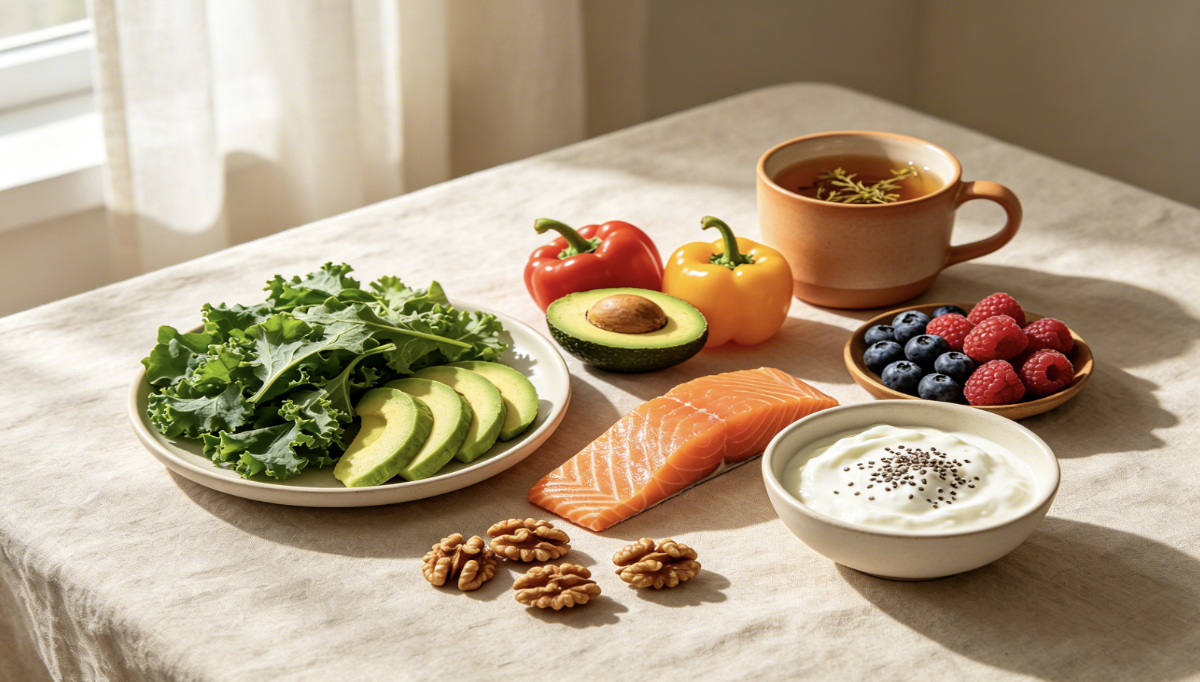
You don’t need to completely change the way you eat. A generally healthy dietary pattern, consistent with the patterns studied in fertility research, tends to emphasize [1][2][5]:
The goal isn’t to find a “magic fertility food.” It’s to build a pattern of eating that provides the nutrients your body needs before pregnancy.
You don’t have to completely eliminate dessert, takeout, or your favorite snack just because you’re trying to conceive. Research has found that dietary patterns higher in fast food, sugar-sweetened beverages, and other less nutritious foods may be associated with poorer fertility outcomes [1][2]. That doesn’t mean eating a slice of cake will affect your ability to become pregnant. Think about patterns rather than individual foods — one meal doesn’t determine your fertility, and neither does one “perfect” meal.
Probably not completely. Caffeine is one of the most common concerns for people trying to conceive.
Once you become pregnant, caffeine recommendations become more specific, so it’s worth discussing your intake with your healthcare provider at that point. Also, if you are more sensitive to caffeine, please consider reducing your daily caffeine intake.
This is where things can get confusing. “Fertility supplements” are widely marketed online, but more supplements do not necessarily mean better fertility.
One supplement that is specifically recommended before pregnancy is folic acid. ASRM recommends folic acid supplementation for women attempting to conceive, with at least 400 micrograms per day recommended to reduce the risk of neural tube defects [3][4]. Other vitamins and supplements may be appropriate depending on your individual health, diet, medications, or medical history — that’s a conversation worth having with your healthcare provider rather than deciding on your own.
If you’re trying to conceive, you don’t need to overhaul your life overnight.
Nutrition is one piece of reproductive health but it isn’t the whole picture. Your menstrual cycle, sleep, physical activity, stress, medical history, and other factors all contribute to your experience when trying to conceive. And unlike a nutrition plan that gives you a general recommendation, your body gives you information that is specific to you.
Diet is one piece of a much bigger picture and the most useful thing you can know isn’t a single food, it’s how your own body responds over time. Fibra is built into the underwear you already wear, quietly tracking your cycle and physiological signals in the background, without any extra logging or effort on your part.
If you’re adjusting your habits, diet included, that kind of continuous, personal data can help you see how your own cycle actually looks over time, rather than relying on guesswork or a generic monthly average. It’s not a substitute for medical advice, but it can give you a clearer, more honest picture of your own patterns as you figure out what works for your body.
This article is for general educational purposes and is not a substitute for individualized medical advice, diagnosis, or treatment. Speak with a qualified healthcare professional about questions concerning your fertility.