
Fibra™ Updates: Cutting-Edge Technology Meets Women’s Health
Published: November 11, 2026
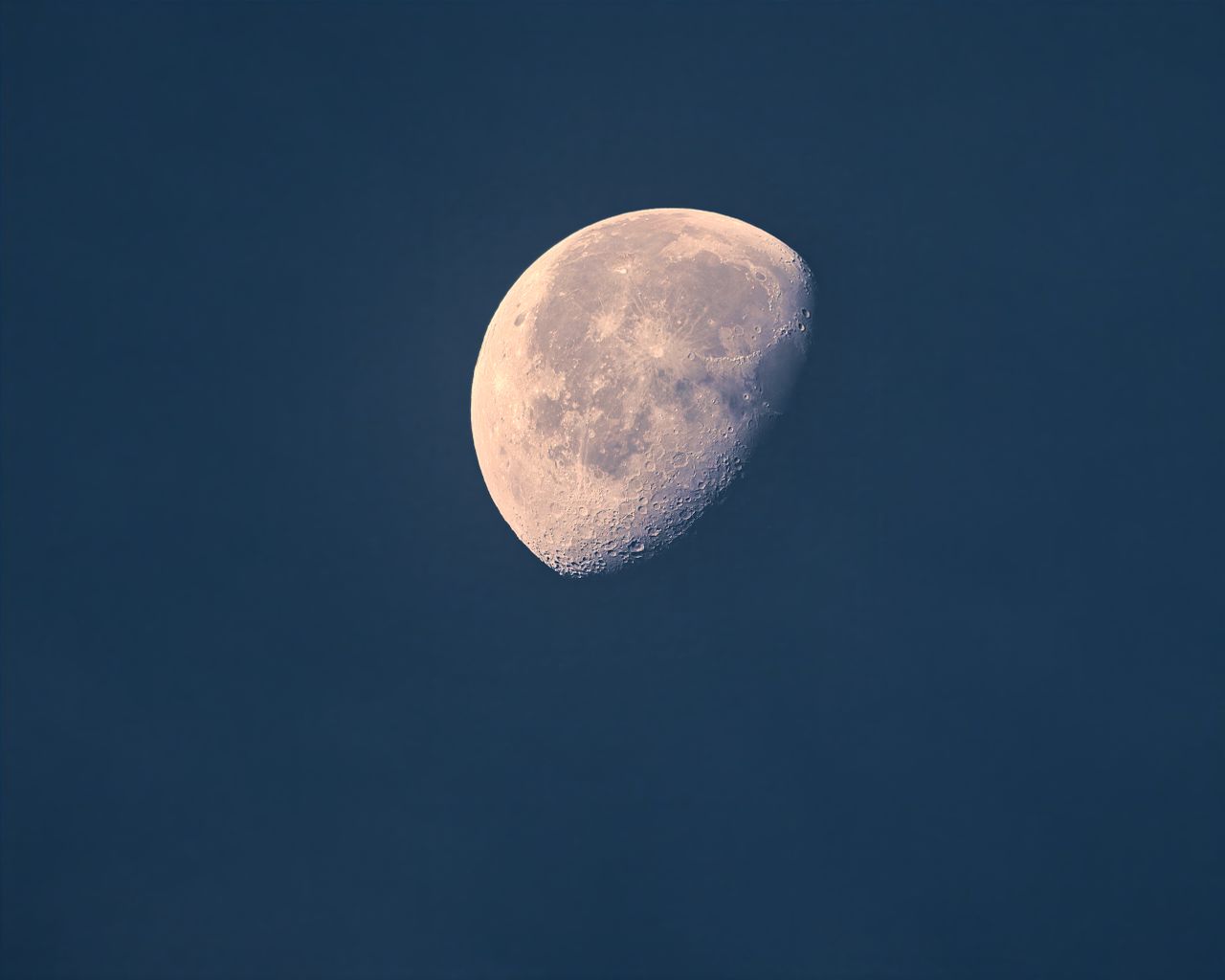
The average menstrual cycle is close to 29 days. The Moon takes about 29.5 days to go from full to full. People have noticed that near-match for a very long time, and it keeps coming back in conversation: Is my period synced to the Moon?
A 2025 study in the journal Science Advances took a fresh look at the question, using menstrual records that some women had kept for decades [1]. It’s an interesting analysis, though it isn’t proof of anything, and it’s easy to over-read. Here’s what the researchers did, what they found, and what they themselves say it can’t show.
The idea isn’t new. The synodic month, the time from one full Moon to the next, lasts about 29.53 days on average [1]. The authors note that many animal species time reproduction to a phase of the lunar cycle, and that earlier studies of women found a relationship between menstrual cycles and the Moon’s cycle, particularly in women whose cycles were close to 29.5 days long [1].
But the evidence has been mixed. The paper points out that three other studies, which used cell phone app data collected in this century, were unable to detect a significant correlation between menstruation and the lunar cycle [1]. As the authors put it, lunar influence on human reproductive behavior remains controversial [1].
That disagreement is exactly what this study set out to untangle.
The team analyzed 176 menstrual records from women who were not using oral contraceptives [1]. The records covered periods of 2 to 37 years, with an average of 6 years, and together included 11,565 menstrual onsets [1]. Some records were on paper calendars with crosses marking the start of each period. Others were exported from cell phone apps [1].
Most of the women lived in Europe, mainly Italy and Germany, with smaller numbers from Israel and North America. All lived in the Northern Hemisphere, between 31°N and 51°N [1]. Some women contributed their diaries after contacting the lead author about her research, which means the group wasn’t randomly selected [1].
The researchers compared the start date of each period with the Moon’s phases. They looked not only at the full and new Moon, but also at two other lunar cycles tied to the Moon’s gravitational pull on Earth [1].
For individual women, the picture was one of temporary pairing. In many records, the menstrual cycle intermittently synchronized with the full or new Moon, then drifted away again [1].
Two details stood out:
The average cycle length across all 176 women was about 29 days [1]. In the authors’ interpretation, the menstrual cycle behaves a bit like a loose biological clock that can briefly lock onto an outside rhythm when its own timing is close enough [1].
Here’s where the study gets interesting. When the researchers split the data by date, the pattern changed. Records from before 2010 showed clear synchrony with the full and new Moon, at both the individual and population level [1]. After 2010, synchrony with the full and new Moon was no longer detectable in the pooled data [1].
2010 is roughly when LED lighting and smartphones became widespread. The authors hypothesize that increasing artificial light at night weakens the connection, since moonlight is a cue that gets drowned out by artificial lighting [1]. They also note that light exposure can shorten the menstrual cycle, which would make it harder to stay in step with the Moon [1].
This is a hypothesis, not a finding. The researchers say data on how much light each woman was actually exposed to wasn’t available [1]. They did see a hint in the data: the link to the full and new Moon was less pronounced in Italian women than in German women, and Northern Italy has more light pollution, but the authors call this “hypothetical” too [1].
One more result: synchrony persisted in some conditions. The link between menstrual cycles and the gravitational cycles of the Moon stayed detectable in the winter and summer solstice periods, when the combined pull of the Moon and Sun is strongest [1]. The authors suggest this could be why the signal survived when the moonlight-based one faded [1].
They also checked Google Trends. In several countries, including Germany and Australia, searches for “period pain” rose around early January, when the Earth is closest to the Sun [1]. The authors present this as an independent hint that fits their other results, though it wasn’t seen in every country, and search data can’t show what any individual is experiencing [1].
The authors are clear about the limits. They write that humans are unlikely to directly perceive these gravitational changes, and that future investigations need to show whether there’s a causal relationship [1].
The study offers an interesting analysis of decades of real menstrual records. It reports that menstrual cycles in this group sometimes lined up with lunar cycles, that the full and new Moon link faded in records from after 2010, and that a link to the Moon’s gravitational cycles remained detectable [1]. The authors are careful to say that what causes the pattern, and whether anything causes it at all, still has to be tested [1].
One thing the study makes clear is that menstrual cycles are dynamic. Cycle length changes with age, and any link to outside rhythms comes and goes [1].
Fibra is smart underwear designed to provide continuous cycle insights, to help you better understand your menstrual patterns and ovulation-related changes over time.
Fibra is intended for general wellness and fertility awareness only. It is not a medical device, does not diagnose infertility, and should not replace professional medical advice.
This article is for general educational purposes and is not a substitute for individualized medical advice, diagnosis, or treatment. If you are concerned about changes in your menstrual cycle, speak with a qualified healthcare professional.