
Fibra™ Updates: Cutting-Edge Technology Meets Women’s Health
Published: November 24, 2026
Your cycle is more than a date on a calendar. It’s a repeating pattern in your body that can change from month to month, and from one stage of life to the next.
That’s why more people are paying attention to it. This article covers why cycle tracking matters, what cycle-tracking methods are available today, and where Fibra, a smart underwear designed for continuous cycle insights, fits in. Fibra’s approach is built on one idea: collect signals directly from the source, passively, in clothing you already wear.
Timing is narrower than most people think. According to a Government of Canada guide, the egg survives for roughly 12 to 24 hours after release, while sperm can survive for up to about 5 days [1]. The American Society for Reproductive Medicine (ASRM) describes the fertile window as the 6-day interval ending on the day of ovulation [2]. Knowing roughly where you are in your cycle is what lets you work with that window, whether you’re hoping to conceive or simply want to understand your body.
Your cycle isn’t a fixed pattern. A study of 612,613 ovulatory cycles found that only 13% were exactly 28 days long, and the authors state that the belief that ovulation consistently occurs on day 14 is not correct [3]. A 2026 study that followed 1,051 women found that ovulation shifted by at least 4 days in 96.5% of women over 12 cycles [4]. ASRM notes that calendar-based methods have limited accuracy for predicting the exact day of ovulation [2].
A regular period doesn’t confirm ovulation. A Canadian study of 610 women in Metro Vancouver found that, other than cycle-timed hormonal testing, there is currently no way to know whether a regular, normal-length cycle is ovulatory [5]. Researchers are also studying whether ovulation matters beyond pregnancy. One meta-analysis found that women with more frequent subclinical ovulatory disturbances had more negative changes in spine bone density, though this is an association and the evidence is still developing [6].
Cycles change over your life. The Government of Canada’s menopause guide says that most people experience perimenopause between ages 40 and 50, that it can last up to 10 years, and that it’s normal for periods to become less predictable during it [7].
Put together, these points show why a single calendar date isn’t enough for many people, and why tracking what your own body is doing is useful.
Some of these tools, such as Natural Cycles’ app, are regulated contraceptive products. The company describes its app as FDA-cleared [8], and it announced a Health Canada license in 2024 [10].
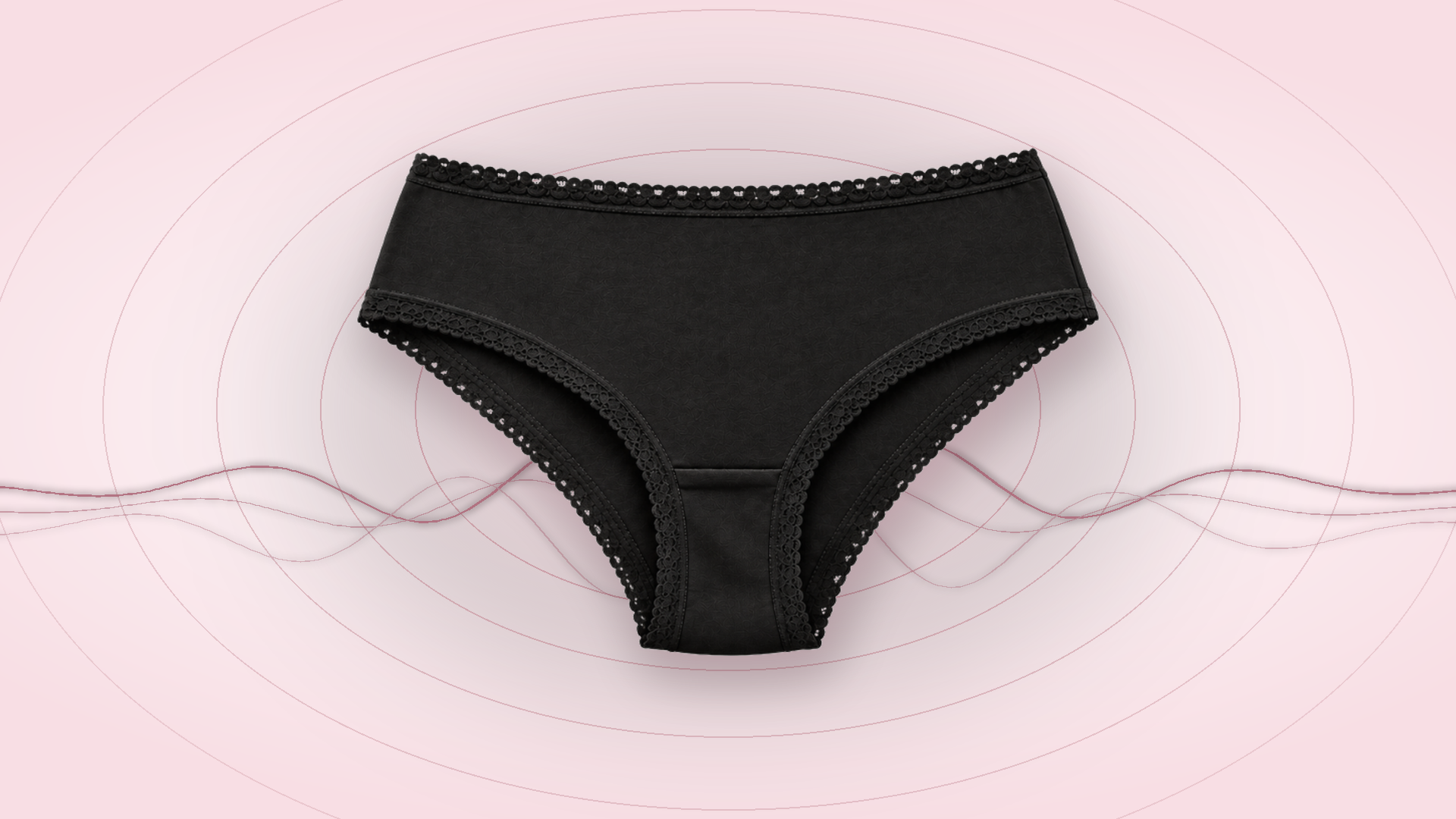
Fibra is smart underwear. Instead of adding a step to your routine, sensing is built into clothing you already wear. The company’s CEO, Parnian Majd, describes it as collecting longitudinal reproductive and physiological signals during everyday wear, with no “daily tests, invasive devices, or manual logging” [1].
It’s passive.
Fibra’s approach is that you wear it and the tracking happens in the background [1]. There’s no moment of the day when you need to remember to test, record, or put something on.
It looks at more than one kind of signal.
Published coverage describes the signals Fibra tracks as vaginal pH, discharge volume, skin temperature, heart rate, and heart rate variability [1][2]. This is a different set of information from the single signals described above.
It’s continuous.
Rather than a reading taken at one moment, Fibra is designed to collect signals across everyday wear and to look at how they change over time [1].
It learns your pattern.
Fibra says it combines its sensor data with a machine learning model to learn each user’s own baseline, rather than relying only on generalized predictions [2].
This article also doesn’t claim that Fibra is more accurate than other tracking methods. The advantages described here are about how the product is designed: passive, continuous, and built into everyday clothing.
If you’d like tracking that doesn’t depend on remembering to do something each day, Fibra is smart underwear designed to provide continuous cycle insights, to help you better understand your menstrual patterns and ovulation-related changes over time.
Fibra is intended for general wellness and fertility awareness only. It is not a medical device, is not a method of birth control, does not diagnose any condition, and should not replace professional medical advice.
This article is for general educational purposes and is not a substitute for individualized medical advice, diagnosis, or treatment. If you are concerned about changes in your menstrual cycle, speak with a qualified healthcare professional.